White Card Course Glossary: Key Construction Terms & Words Explained

Key Takeaways
- Construction sites have their own language: WHS terms like hazards, risk assessments, SWMS, and control measures are used daily on real job sites, not just in training.
- This glossary breaks down CPCWHS1001 terms in plain English: It explains what each key White Card term means, why it matters, and how it applies on Australian construction sites.
- Understanding safety terminology helps you stay compliant: Knowing the correct terms helps you follow instructions, complete paperwork correctly, and meet legal WHS responsibilities.
- Knowing the terms improves communication on site: Workers who understand site language can communicate clearly with supervisors, foremen, and safety personnel, reducing mistakes and incidents.
- Being job-ready means understanding safety procedures: Learning these definitions helps you recognise hazards faster, apply the right controls, and respond correctly in emergencies.
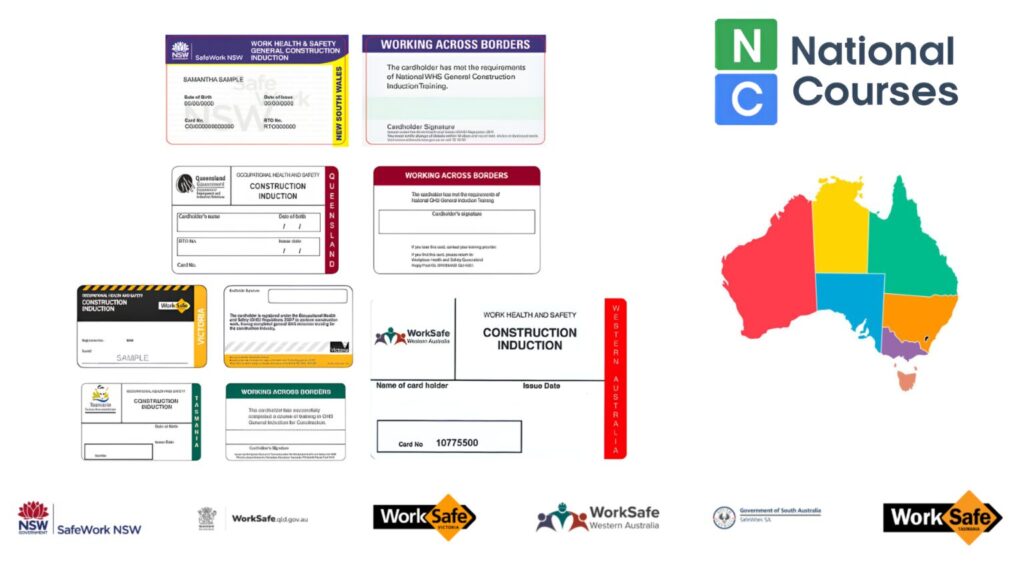
When you complete a White Card course with National Courses, you’ll be introduced to a lot of construction and safety terminology — terms you’ll quickly hear again once you’re on a real job site.
This glossary breaks down the key words from the White Card course (CPCWHS1001) in plain, easy-to-understand language, showing not just what they mean, but why they matter and how they’re applied on Australian construction sites.
Whether you’re completely new to the construction industry or just want to get a better handle on the safety language used during White Card training, this guide covers all the essential terms you’ll need to navigate a site safely and confidently.
Quick Reference Table of Terms (Click to View)
Core WHS Concepts
- Work Health and Safety (WHS)
- Hazard
- Risk
- Risk Assessment
- Control Measure
- Hierarchy of Control
- Duty of Care
Roles & Responsibilities
- Person Conducting a Business or Undertaking (PCBU)
- Principal Contractor
- Foreman
- Supervisor
- Site Manager
- Worker
- Health and Safety Representative (HSR)
- Safety Officer / WHS Officer
Site Rules & Documents
- Site Induction
- Safe Work Method Statement (SWMS)
- Job Safety Analysis (JSA)
- Safety Data Sheet (SDS)
- Permit to Work
- Traffic Management Plan (TMP)
- Toolbox Talk
PPE & Safety Equipment
- Personal Protective Equipment (PPE)
- High-Visibility Clothing (Hi-Vis)
- Hard Hat
- Safety Footwear
- Eye Protection
- Hearing Protection
- Respiratory Protective Equipment (RPE)
Hazards & Risk Types
- Physical Hazard
- Chemical Hazard
- Biological Hazard
- Manual Handling
- Working at Heights
- Confined Space
- Silica Dust
Incidents, Emergencies & Reporting
Core WHS Concepts – Definitions
Work Health and Safety (WHS)
The laws, policies, and procedures that keep workers safe on Australian construction sites, covering everything from recognising hazards to knowing your rights and responsibilities. WHS applies to every person on site, from apprentices to supervisors, and is the foundation of safe work practices across the construction industry.
Hazard
Anything on a site that could hurt someone or cause damage — from moving machinery and falling objects to chemicals, electricity, unstable ground, poor lighting, or extreme weather. Hazards exist on every construction site, which is why recognising them early is one of the most important skills you’ll learn in a White Card course.
Risk
How likely a hazard is to cause harm, combined with how serious the potential injury or damage could be. A hazard might always exist, but the risk level can change depending on conditions, the task being performed, the equipment used, and how well the area is controlled.
Risk Assessment
The process of spotting hazards, figuring out how dangerous they are, and deciding the best way to control or eliminate them. Risk assessments are used before work begins, when conditions change, or when a new hazard is identified. They help prevent incidents by making sure hazards are managed before someone gets hurt.
Control Measure
Tools, systems, or procedures put in place to prevent accidents, like guardrails, warning signs, machinery shields, exclusion zones, safe work procedures, or PPE. A control measure can reduce the chance of injury, limit the severity of harm, or completely remove the hazard if applied correctly.
Hierarchy of Control
A step-by-step approach to managing hazards, starting with eliminating the hazard entirely, then substituting, isolating, engineering, using administrative procedures, and finally relying on PPE. This method is used because PPE is the least effective control if used alone — the goal is always to control hazards at the source whenever possible.
Duty of Care
Your responsibility — and everyone else’s on site — to act in ways that protect your own safety and the safety of others. Duty of care means following site rules, using equipment correctly, reporting hazards, and never ignoring unsafe behaviour. On construction sites, failing to meet duty of care can lead to serious injuries, legal penalties, or project shutdowns.
Roles & Responsibilities – Definitions
Person Conducting a Business or Undertaking (PCBU)
The company or individual legally responsible for making sure the work environment is safe, workers are trained, and procedures are followed. A PCBU must provide safe systems of work, proper supervision, and access to safety equipment, and they are accountable if WHS obligations are not met.
Principal Contractor
The main contractor overseeing the construction project, coordinating trades, managing high-risk tasks, and ensuring the whole site meets safety standards. The principal contractor is responsible for implementing site-wide WHS systems and ensuring everyone follows site procedures and safety documentation such as SWMS.
Foreman
The on-site leader who assigns daily tasks, checks safety compliance, and keeps communication flowing between workers and management. A foreman often manages the day-to-day running of work areas and makes sure work is carried out safely, efficiently, and in line with site rules.
Supervisor
Manages a specific crew or trade, ensures procedures are followed correctly, and helps workers do their jobs safely. Supervisors monitor performance and safety behaviour and are often responsible for stopping work if a task becomes unsafe.
Site Manager
Responsible for the overall running of the site, including schedules, resource management, and keeping WHS regulations on track. Site managers oversee the big picture, ensuring the project runs smoothly while maintaining compliance with WHS laws, safety plans, and contractor requirements.
Worker
Anyone performing work on the site — employees, subcontractors, apprentices, or labour hire staff — who must follow safety procedures and report hazards. Workers play a direct role in site safety because they are often the first to spot hazards or unsafe behaviour.
Health and Safety Representative (HSR)
A worker elected to represent colleagues on safety issues, raise concerns, and help improve site practices. HSRs can assist workers in reporting hazards and may be involved in safety discussions with management to ensure WHS issues are addressed.
Safety Officer / WHS Officer
A safety specialist who inspects the site, monitors compliance, reviews SWMS, and investigates incidents. WHS officers help identify risks before they lead to injuries and may run safety audits, training updates, and reporting procedures to keep the site legally compliant.
Site Rules & Documents – Definitions
Site Induction
The orientation all workers complete before entering a site, covering hazards, rules, emergency procedures, and expectations. A site induction ensures every person understands the specific safety risks of that job site, where to go in an emergency, and what behaviour is required to stay compliant.
Safe Work Method Statement (SWMS)
A document that explains high-risk tasks step by step, including the hazards involved and how they will be controlled. SWMS are legally required for certain high-risk construction work and must be understood by workers before starting the task. They are often reviewed during toolbox talks and site planning meetings.
Job Safety Analysis (JSA)
A breakdown of a job into individual steps to identify risks and make work safer before starting. JSAs help workers understand the hazards involved in each stage of a task, and they encourage planning and communication so work is performed safely and consistently.
Safety Data Sheet (SDS)
Detailed information about a chemical’s hazards, handling requirements, and emergency procedures. SDS documents explain what PPE is required, how to store and transport chemicals safely, what to do if exposure occurs, and how to respond to spills or fire risks.
Permit to Work
Written approval required for certain high-risk jobs, ensuring all safety measures are in place. Permits are commonly required for tasks such as hot works, confined space entry, or work near live electrical services. They help confirm hazards have been assessed and controls are in place before work begins.
Traffic Management Plan (TMP)
A plan that directs how vehicles and pedestrians move safely around the worksite. TMPs are essential for sites with deliveries, mobile plant, forklifts, or machinery, as they help prevent collisions and ensure workers understand exclusion zones, signage, and safe access points.
Toolbox Talk
Short, practical safety briefings held on-site to remind workers about hazards or procedures. Toolbox talks are usually delivered before a shift or before starting a high-risk task, and they help reinforce key safety messages, improve communication, and ensure workers stay aware of changing site conditions.
PPE & Safety Equipment – Definitions
Personal Protective Equipment (PPE)
Clothing or gear designed to protect you from hazards, like helmets, gloves, goggles, and safety boots. PPE is essential on construction sites, but it should always be used alongside other controls like barriers, safe work procedures, and engineered safety systems.
High-Visibility Clothing (Hi-Vis)
Bright clothing that makes you easy to see on site, especially near machinery or vehicles. Hi-vis reduces the risk of being struck by moving plant or equipment and is often mandatory on active construction sites, particularly in low-light conditions or high-traffic areas.
Hard Hat
Helmet that protects your head from falling objects, collisions, and other injuries. Hard hats are one of the most common PPE items on site and must be worn correctly and replaced when damaged or after a significant impact.
Safety Footwear
Boots with protective features like steel caps or slip-resistant soles to prevent injuries to your feet. Safety footwear helps reduce injuries from dropped objects, sharp materials, uneven surfaces, and slippery conditions, which are all common hazards on construction sites.
Eye Protection
Goggles or safety glasses that shield your eyes from dust, debris, or chemicals. Eye injuries are common in construction, especially during grinding, drilling, cutting, or working with chemicals, making proper eye protection a key part of daily site safety.
Hearing Protection
Earplugs or earmuffs that reduce the risk of hearing loss from noisy equipment or environments. Long-term exposure to loud construction noise can cause permanent damage, which is why hearing protection is required when working near heavy machinery, power tools, or high-noise areas.
Respiratory Protective Equipment (RPE)
Masks or respirators that stop you from inhaling harmful dust, fumes, or chemicals. RPE is critical when working around silica dust, asbestos risks, chemical vapours, or welding fumes. Choosing the correct type of mask and ensuring proper fit is essential for effective protection.
Hazards & Risk Types – Definitions
Physical Hazard
Anything on site that can cause injury through impact, falls, or movement, like moving machinery, tools, falling materials, uneven surfaces, or unprotected edges. Physical hazards are some of the most common risks on construction sites, which is why good housekeeping and safe work practices are essential.
Chemical Hazard
Harmful substances you may encounter, including fuels, solvents, adhesives, paints, cleaning chemicals, and construction products. Chemical hazards can cause burns, poisoning, respiratory issues, and long-term illness, which is why SDS documents and correct PPE are critical when handling these materials.
Biological Hazard
Hazards from living things, such as bacteria, viruses, mould, or human/animal fluids. Biological hazards may occur when working in sewage systems, waste environments, damp building areas, or when handling contaminated materials. Proper hygiene procedures and PPE help reduce exposure risks.
Manual Handling
Lifting, carrying, pushing, or pulling objects that could cause muscle or joint injuries. Manual handling injuries are extremely common and can result from poor posture, heavy loads, repetitive movement, or rushing tasks without proper planning. Correct technique and using mechanical aids can reduce these risks.
Working at Heights
Tasks performed where there is a risk of falling, including scaffolding, ladders, elevated platforms, or roofs. Working at heights is considered high-risk construction work, and proper controls such as fall prevention systems, guardrails, harnesses, and safe access methods must be used.
Confined Space
An enclosed or partially enclosed space with limited entry, which may have low oxygen, toxic gases, or other hazards. Confined spaces are dangerous because rescue can be difficult and conditions can change quickly. Entry often requires a permit, trained workers, monitoring equipment, and strict procedures.
Silica Dust
Fine dust produced when cutting, grinding, or drilling concrete, stone, or tiles, which can seriously damage lungs if inhaled. Silica exposure can cause long-term illness such as silicosis, which is why dust suppression systems, ventilation, and respiratory protection are critical when performing high-dust tasks.
Incidents, Emergencies & Reporting – Definitions
Incident
Any unplanned event that causes or could cause harm on site. Incidents can include injuries, property damage, equipment failure, chemical exposure, or dangerous near misses. Reporting incidents helps prevent the same situation from happening again.
Near Miss
An event that had the potential to cause injury but didn’t, which can be used to prevent future accidents. Near misses are important warning signs that something on site needs to change, whether that’s a procedure, a control measure, or a worker behaviour issue.
Notifiable Incident
A serious accident or dangerous event that must be reported to the safety regulator. This can include fatalities, serious injuries, or major dangerous occurrences. Notifiable incidents have strict legal reporting requirements and often result in investigations.
First Aid
Immediate treatment provided to someone injured or sick on site until professional medical help arrives. On construction sites, first aid can involve managing bleeding, fractures, burns, eye injuries, or shock. Quick first aid response can prevent a minor injury from becoming serious.
Emergency Procedures
Pre-planned steps to respond safely to fires, spills, accidents, or other on-site emergencies. Emergency procedures include evacuation routes, assembly points, communication steps, and emergency contact processes. Every worker should know the site emergency plan before starting work.
Evacuation
Moving workers safely out of a dangerous area or the entire site in the event of an emergency. Evacuations may occur due to fire, gas leaks, structural risks, chemical spills, or other threats. Following evacuation procedures correctly can prevent panic and ensure everyone is accounted for.
Need to Book a White Card Course?
Understanding safety terminology is important — being able to recognise it, remember it, and apply it on a live construction site is what really keeps you safe.
National Courses’ White Card training is built for people entering construction for the first time, as well as workers completing a refresher. Instead of passive learning, our courses focus on clear explanations, practical scenarios, and real site examples, so safety concepts are easy to understand and hard to forget.
By the end of your course, you’ll be confident in your ability to:
- Identify common site hazards before they cause problems
- Understand which safety controls are appropriate for different tasks
- Communicate effectively with supervisors, foremen, and WHS personnel
- Follow Australian WHS requirements and site procedures correctly
Our trainers know what new workers struggle with on site and how safety knowledge is actually used day to day. That’s why they focus on plain-language explanations and practical learning, helping you retain what you’ve learned well beyond the course itself.
About National Courses
Nationally Recognised Training and Certification for a Wide Range of Industries

National Courses Pty Ltd (RTO 41072) is a trusted training provider offering short, nationally recognised courses across Australia.
We specialise in practical, job-ready training for industries like construction, civil, safety, and first aid — helping individuals and businesses stay qualified and competitive.
National Courses PTY LTD works with government programs, employers, and community organisations to deliver training that leads to real employment outcomes.