
How Long Does an RSA Course Take in Australia?
Many Responsible Service of Alcohol courses take around four to eight hours of learning and assessment and can be completed in one day. How long an RSA course takes depends on the state, the provider and the delivery format. Additional certificate or card steps can extend the time before you have all the documents you need.
Our RSA course runs for six hours plus breaks in one classroom session. Self-paced courses offered by other providers let you spread your study over several sessions, but assessment and state requirements still apply.

In Short
- Most RSA courses fit into one day, with around four to eight hours of learning and assessment.
- Our RSA classroom course takes 7 hours including breaks.
- Online assessment may need trainer review before your certificate can be issued.
- Participants in Victoria must complete a 60-minute sexual harassment and assault module.
How long does an RSA course take?
A classroom course follows a fixed timetable. RSA courses in Australia take around four to eight hours, depending on the provider and the state.
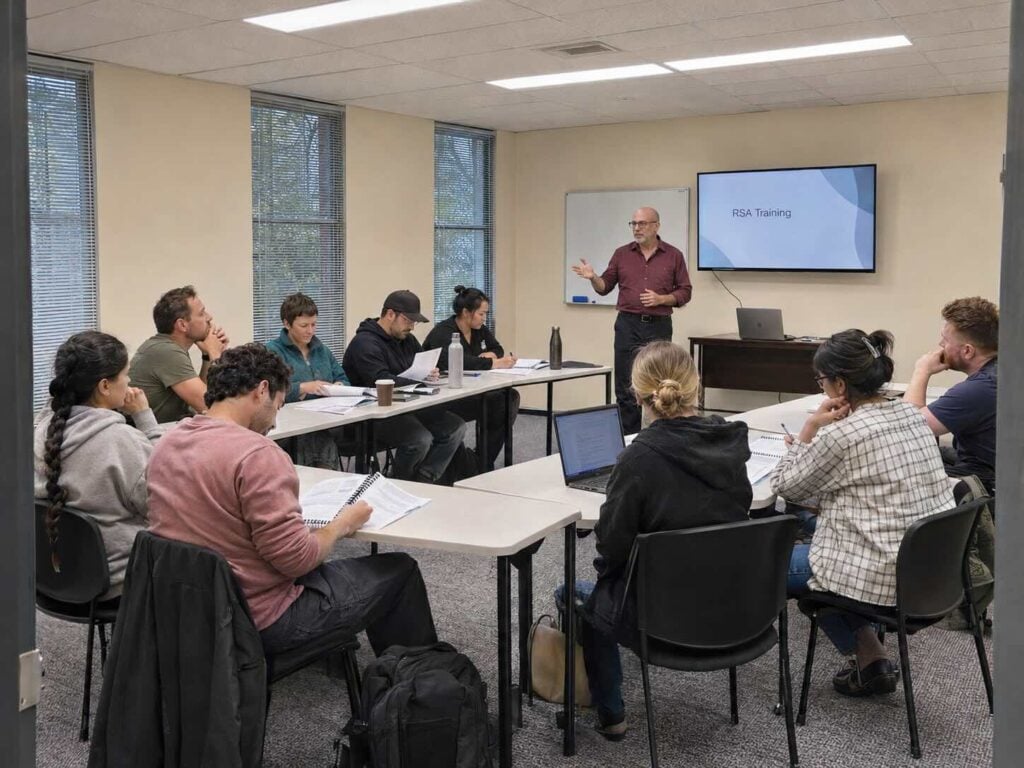
Our RSA courses at National Courses run for seven hours, including training, assessment and breaks. You complete the course in one day.
You attend the scheduled session, complete the learning activities and demonstrate the required skills. With self-paced online training, the total study hours you take to finish can be different.
When comparing options, add together learning time, assessment time and any extra state requirements. Also check how quickly the provider reviews submitted assessments.
RSA course duration by state and territory
RSA rules apply where you intend to work. Choose a course accepted in that state or territory, then check its timetable. The minimums below are not a guarantee that every provider finishes at that time.
| State or territory | Training time | Delivery options | Extra time to consider |
| New South Wales | At least six hours for classroom or live virtual training, excluding breaks and administration. | Approved classroom, virtual and self-paced online courses. | Interim certificate issue and the Service NSW competency card application. |
| Victoria | At least six hours for in-person training, excluding breaks. | Approved classroom and online courses. | A 60-minute additional module, surveys and processing before the Victorian certificate. |
| Queensland | Provider-set study and assessment time; confirm the complete timetable. | Classroom and online courses through suitable RTOs. | Assessment review and Statement of Attainment issue. |
| South Australia | At least three hours of training, with assessment additional. | Approved classroom and online courses. | Add the assessment time to the training minimum. |
| Western Australia | Provider-set study and assessment time; confirm the complete timetable. | Classroom and online options. | Assessment review and Statement of Attainment issue. |
| Tasmania | The approved provider sets the course timetable. | Approved classroom and online options. | Complete all assessment required for the accepted certificate. |
| Australian Capital Territory | At least three hours of training, excluding assessment. | ACT-approved classroom and online programs. | Assessment time is additional to the minimum training hours. |
| Northern Territory | Provider-set study and assessment time. | Classroom and online courses through suitable RTOs. | Check that the evidence meets NT requirements, including the age of existing training. |
The six-hour classroom minimums are set out in the NSW training provider conditions and Victorian RSA course requirements.
South Australia’s RSA training guidelines and the ACT course approval guidelines specify three training hours before assessment is added.
For states without a single timetable in this table, compare the provider’s full course estimate rather than assuming the shortest duration from another state applies.
Is online RSA training faster than classroom training?
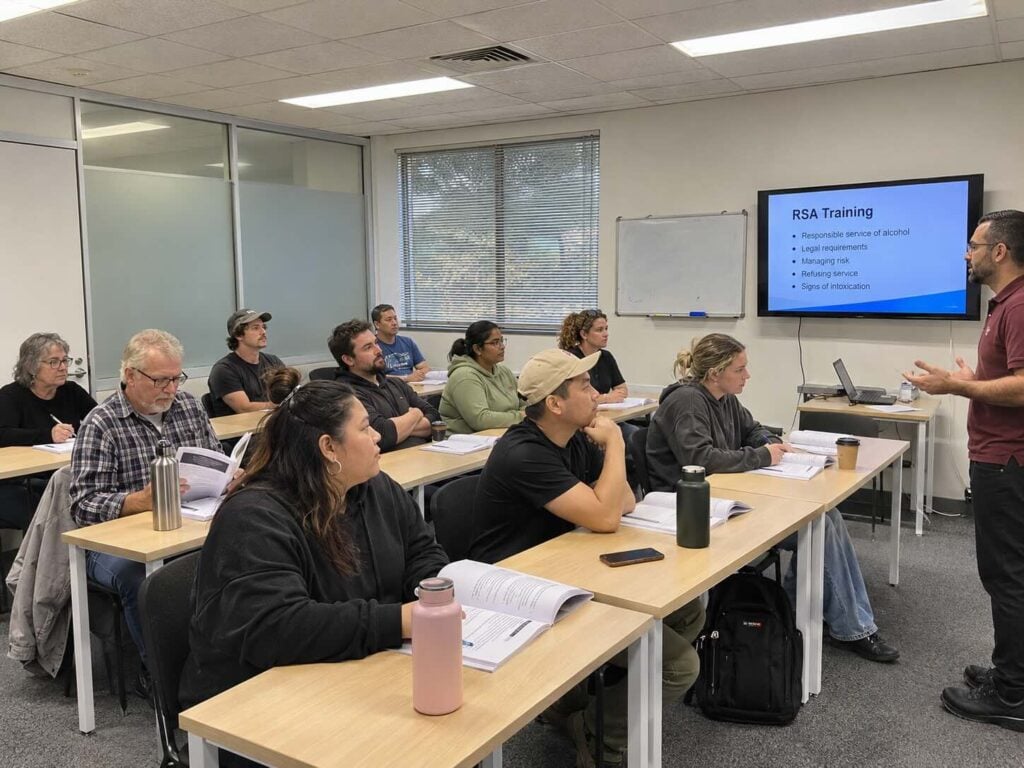
It can be more flexible, but the quickest option depends on both study time and assessment arrangements. A scheduled class may finish in one day, while an online learner can finish the learning sooner but still wait for assessment feedback.
Face-to-face RSA courses
You attend a classroom, work through the content with a trainer and take part in discussions and practical scenarios. The set timetable makes it easier to plan time away from work.
Our NSW RSA course has sessions scheduled from 8:30 am to 3:30 PM. That is a seven-hour booking window containing six hours of training plus breaks. Check the session details before booking, as the training duration and total attendance window serve different purposes.
Live virtual RSA courses
A virtual course connects you to a trainer at a booked time through video conferencing. It saves the journey to a venue, but you still need to attend, participate and complete the required assessments.
Check the technical requirements before class, including a working camera, microphone and reliable internet. The trainer must be able to communicate with you and assess your responses.
Self-paced online RSA courses
Self-paced study lets you complete the learning material in your own time. It can suit someone who needs to study around shifts or family commitments.
Ask how practical assessment is completed. A provider may require recorded responses, a live assessment or other activities that demonstrate the national unit’s skills. Also check assessor availability and the expected marking time, especially when submitting work at night or over a weekend.
What do you learn during an RSA course?
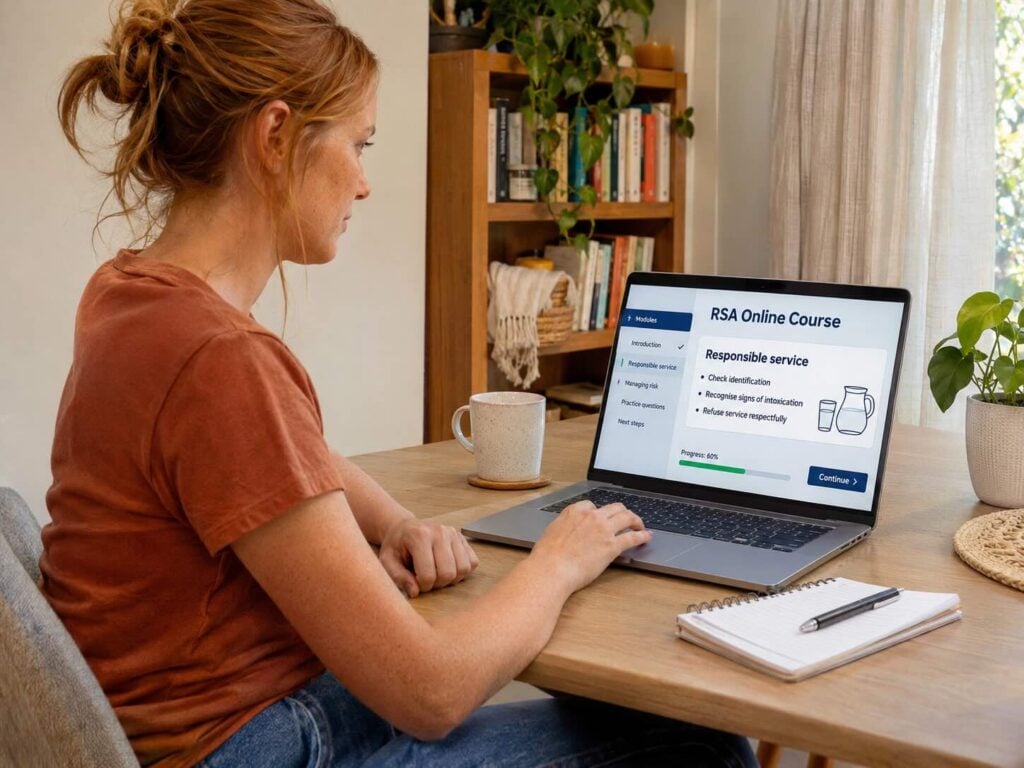
RSA training prepares you for decisions that arise when selling, serving or supplying alcohol. The course uses examples and activities to connect the rules with situations you may face during a shift.
Alcohol service rules and checking identification
You learn the responsibilities that apply to your role and the liquor laws covered by the course. This includes checking acceptable proof of age, recognising situations where alcohol cannot be supplied and following workplace procedures.
The state content matters. Completing the national unit does not remove the need to understand the rules where you will work.
Recognising intoxication and reducing harm
Training covers standard drinks, the effects of alcohol and signs that a customer may be intoxicated. Activities help you consider the whole situation and choose an appropriate response.
You also discuss ways to reduce harm, such as offering alternatives and seeking help when a situation is beyond your role or authority.
Refusing service and managing difficult situations
You practise explaining a refusal clearly and calmly. Scenarios can involve a customer who challenges your decision, a request to buy alcohol for someone else or a situation that needs a supervisor’s help.
These activities take time because the assessor needs to hear how you communicate and see how you apply the rules. Knowing the correct answer in a quiz is not the same as demonstrating a suitable response.

What assessment do you need to complete?
RSA assessment includes knowledge questions and practical evidence. The exact format depends on the provider and approved course, but you need to show that you understand the requirements and can apply them.
Knowledge tasks may involve written questions, online questions or discussion with the assessor. Practical tasks can use role-play and realistic customer scenarios. Some online providers ask you to record responses and submit them for review.
Read the instructions before starting a recording or assessment. Missing part of a scenario, providing an unclear recording or leaving a question unanswered can lead to another submission.
There is no automatic pass for completing the modules. The assessor must confirm that you meet the required standard. Ask about further attempts and any associated fees before enrolling, particularly when you have a work deadline.
How long until you receive your RSA documents and can work?
Your course completion date and the date you receive every required document may differ. Allow time for assessment review, identity checks and any separate state process.
Your Statement of Attainment
The RTO issues a Statement of Attainment after you successfully complete SITHFAB021 and meet the certification requirements. It is the national record of your RSA training.
Some providers can issue it on the day, while others need processing time. Confirm the turnaround before booking an urgent course.
A missing Unique Student Identifier (USI), incomplete identity check or outstanding practical task can hold up issue. Your USI connects your nationally recognised training records.
NSW interim certificates and competency cards
After an approved NSW RSA course, you receive an interim certificate that is valid for 90 days. It provides temporary evidence for relevant work while you arrange your competency card, subject to any age or role restrictions.
Take the interim certificate and the required original identity documents to a Service NSW Centre for your photo and application. The card application has its own 100-point identity requirement, separate from the provider’s enrolment checks.
Service NSW’s competency card process allows up to five weeks for the physical card to arrive after application. A digital card can also be added to the Service NSW app once you have applied. Do not leave the application until your interim certificate is about to expire.
Victoria’s additional module and certificate
Victorian learners complete an approved RSA course and the Sexual Harassment and Assault: Recognise, Prevent and Respond module. The additional module takes about 60 minutes and includes pre-training and post-training surveys.
Your provider first sends your completion details to Liquor Control Victoria. You then receive instructions for the Learning Hub. This can take a few working days, so the extra module may not be available immediately after class.
Once both parts are complete, download the Victorian RSA Certificate of Completion and give it to your employer. The Liquor Control Victoria Learning Hub explains the steps. The RTO’s Statement of Attainment alone does not replace this Victorian certificate.
For jobs that request RSA, completing the training and required certificate steps before applying is a practical way to show you are prepared.

How can you avoid delays when completing your RSA?
Use the following checklist before booking, particularly when you need your certificate for a planned start date.
- Choose a course accepted in the state or territory where you intend to work.
- Check the full training timetable, assessment method and certificate turnaround.
- Prepare your identification and USI using matching personal details.
- Test any equipment required for online attendance or recorded assessment.
- Allow time for feedback and further assessment if needed.
- Complete any additional module or card application promptly.
For our NSW course, bring photo identification, provide a valid USI (unless exempt) and attend the full session.
How long does an RSA refresher or bridging course take?
RSA refresher and bridging course times vary by state. Bridging training helps eligible interstate RSA holders meet the requirements of another state. It is not simply a shorter version of the full RSA course.
- ACT: Approved refresher training includes at least one hour of training, excluding assessment.
- Victoria: Refresher training usually takes around 60–90 minutes, depending on the pathway.
- NSW: RSA competency cards are renewed through the required online refresher process every five years.
- Northern Territory: RSA refresher training is required on a three-year cycle.
Interstate bridging can also involve an application before the learning starts. For example, Liquor Control Victoria asks applicants to allow 10 working days for bridging application processing.
Book your RSA course with National Courses
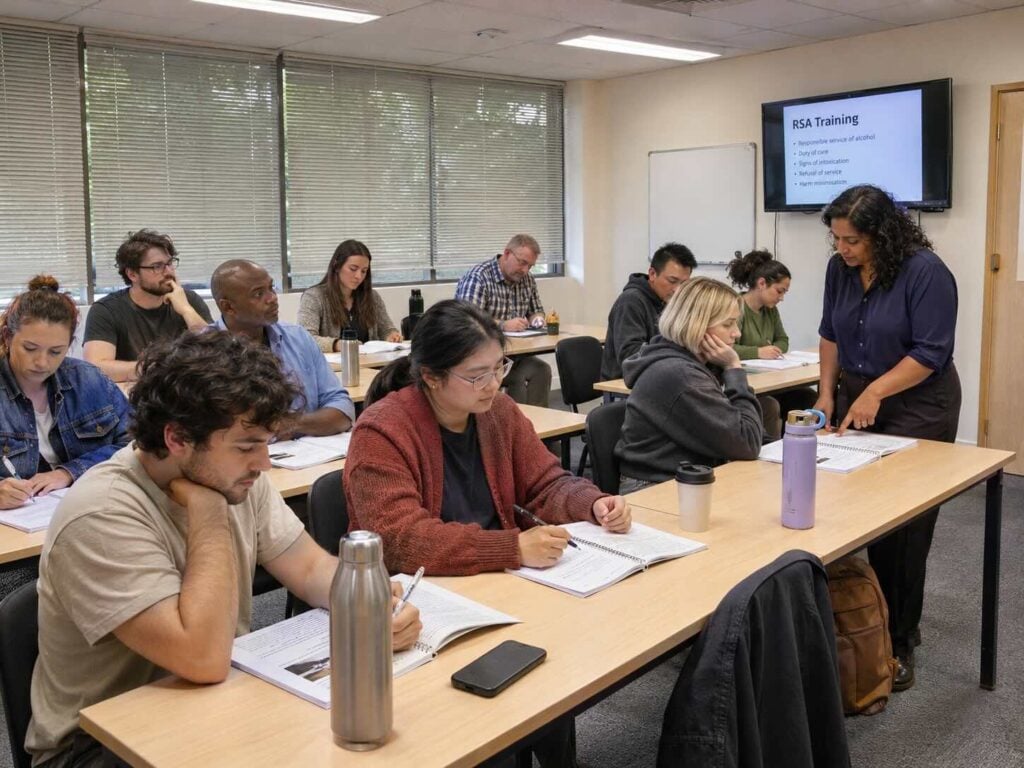
We are a Registered Training Organisation, RTO 41072, with face-to-face RSA training available in NSW and South Australia. Our courses use trainer-led discussion and practical scenarios to prepare you for responsible alcohol service.
Find your RSA course to view current dates, locations and the requirements for your chosen state.
Frequently Asked Questions
Can I complete RSA training before turning 18?
Yes, RSA training is available to people under 18, subject to the provider’s entry conditions. Holding an RSA certificate does not remove age restrictions on work.
In NSW, a minor can hold an RSA but cannot sell or supply alcohol unless specifically authorised in exceptional circumstances. The NSW RSA handbook explains this distinction.
Do I need hospitality experience to enrol?
No. Our RSA course does not require previous hospitality experience. You need to meet the identification and enrolment requirements, understand the instruction and complete the knowledge and practical assessments.
Does an RSA course include RCG or RSG training?
No. RSA covers responsible alcohol service. Responsible Conduct of Gambling or Responsible Service of Gambling training covers gambling-related duties. A combined booking includes separate training requirements, so allow extra time and check the credentials needed for the job.
Does RSA training teach bartending or cocktail-making?
No. RSA focuses on serving alcohol responsibly and following the applicable rules. You may discuss standard drinks and service situations, but cocktail preparation and broader bar skills are covered by separate training or workplace instruction.
Can an employer arrange RSA training for a group?
Yes. Contact us with the workplace location, group size and preferred dates so we can confirm suitable arrangements. A group booking still needs to meet the relevant training hours, assessment requirements and any state conditions on delivery.
Find your RSA course with National Courses
Ready to take the next step? Explore our short courses, choose your training location and check upcoming dates with our team.
National Courses Pty Ltd · RTO 41072.
Need a hand choosing? Call 1300 677 191.

Samuel Bohr

White Card Course Glossary: Key Construction Terms & Words Explained
February 15, 2026Start a Career in Construction, Civil, and Mining Fields
February 24, 2025