



10 Renewable Energy Jobs in Australia You Can Start Now
Australia’s renewable energy sector offers opportunities for people with a wide range of skills and experience levels. Some positions require a trade or technical qualification, but many entry-level roles hire with only nationally recognised safety tickets, which anyone can get.
In Short
- You don't need renewable energy experience to start in the industry. Most entry-level roles like solar farm installer or construction labourer just need the right safety tickets, starting with a White Card.
- Pay ranges widely by role. Labourers and installers start around $65,000 to $90,000, while specialised workers like high voltage electricians can earn $180,000 or more.
- Skills from construction, mining, civil works and warehousing transfer straight across. Qualified electricians and machinery operators are especially in demand.
- Most major projects are in regional Australia, often on FIFO or DIDO rosters. Being willing to travel opens up far more opportunities and often adds allowances and overtime on top of base pay.
In this guide, we cover ten of the most common renewable energy jobs in Australia, along with salary expectations, required qualifications and how to get started.
What Renewable Energy Employers Look For (Even Without Experience)
Many renewable energy employers hire workers without direct industry experience, provided they have the right safety qualifications.
A White Card is the starting point. It’s required to access construction sites where solar farms, wind farms, battery storage systems and transmission infrastructure are built. Working at Heights, First Aid & CPR and EWP qualifications make you more competitive, since most projects require them. For plant operator or logistics roles, a Forklift Licence or relevant machinery tickets give you an extra edge.
Qualified electricians, mechanical tradespeople and experienced construction workers are particularly sought after, but skills from mining, warehousing and civil infrastructure transfer directly too.
Flexibility also matters. Most projects run in regional Australia on FIFO basis, DIDO or roster-based schedules, so willingness to travel opens more doors. The bottom line: arriving site-ready with the right tickets matters far more than previous renewable energy experience.

10 Popular Renewable Energy Jobs in Australia
Below are ten jobs you can find on renewable energy projects right now. Some need a trade behind you, others just need the right tickets.
For each one, we cover what the work looks like, what you need to get hired and how much you can expect to earn. Keep in mind that pay changes a lot depending on experience, location and overtime.
1. Solar Farm Installer
Average Salary: $65,000-$90,000 per year
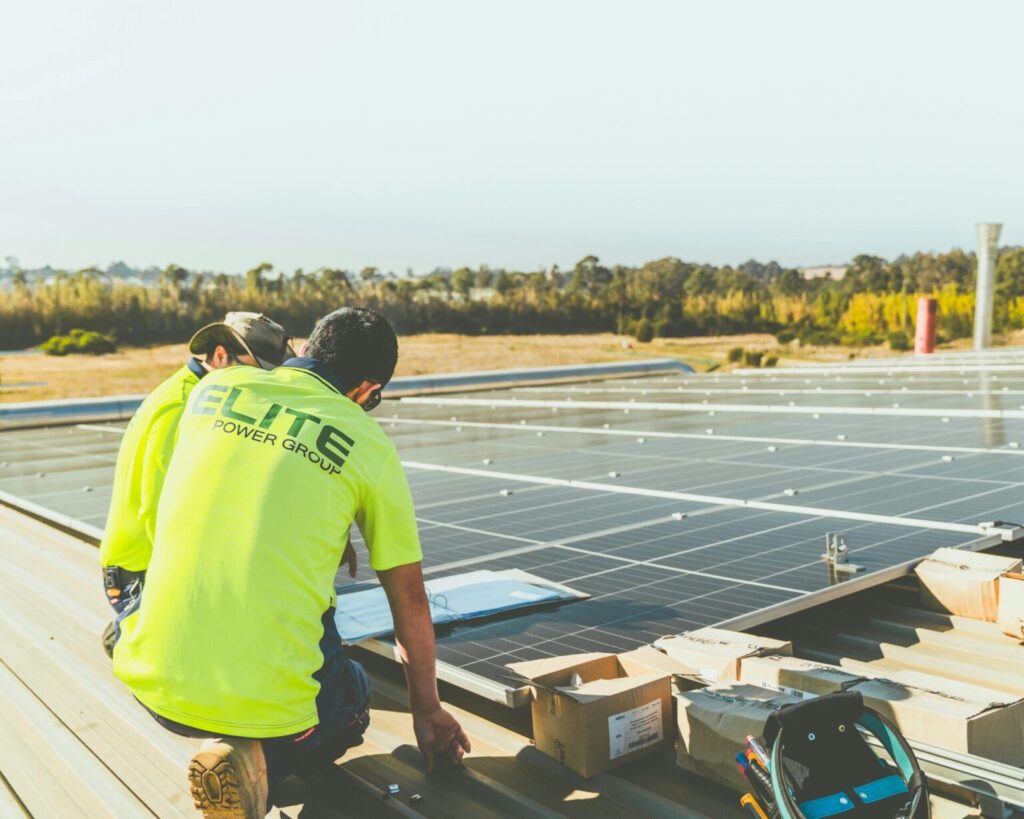
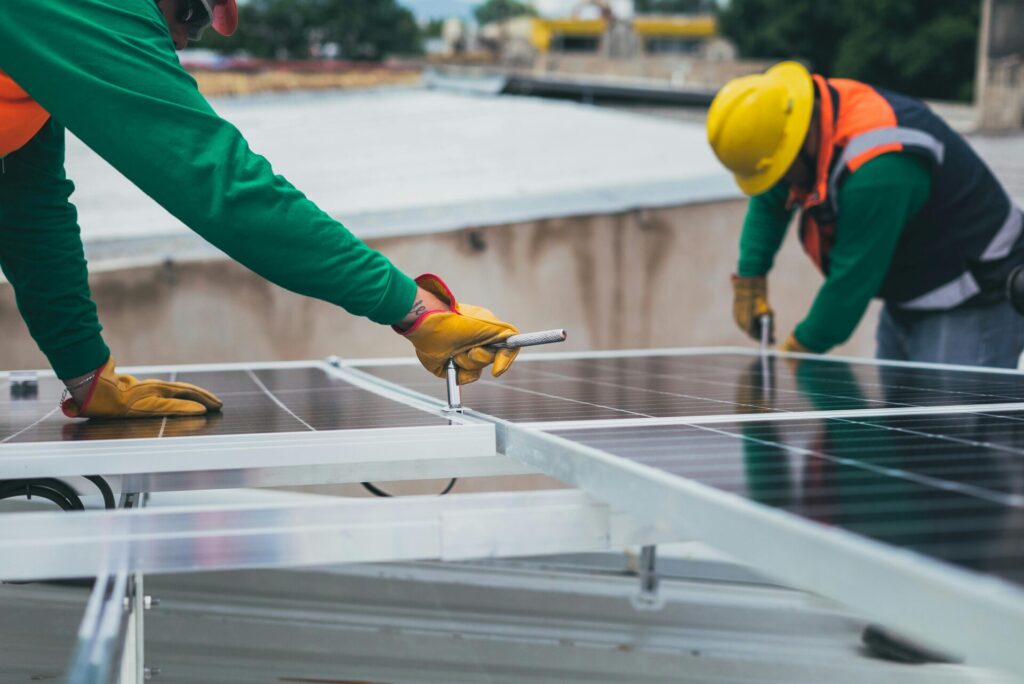
Solar farm installers assemble and install solar panels, mounting systems and associated equipment on large-scale renewable energy projects. The work is physically active and usually takes place outdoors on construction sites across regional Australia.
This is one of the most accessible entry points into the renewable energy industry and provides valuable experience that can lead to supervisory or specialist installation roles.
Essential Qualifications:
- White Card
- Working at Heights
- Elevated Work Platform (EWP)
- First Aid & CPR
To get started, complete your White Card first, then obtain Working at Heights and EWP training to become more competitive when applying for solar farm construction projects.
Major projects like those in western NSW, regional Victoria and Queensland’s solar corridor hire installers in large numbers during construction phases, often through labour hire agencies.
The work is repetitive but the rosters are predictable, and many installers move into panel quality control, mechanical supervision or site leadership within a couple of years.
2. Wind Turbine Technician
Average Salary: $85,000-$130,000+ per year
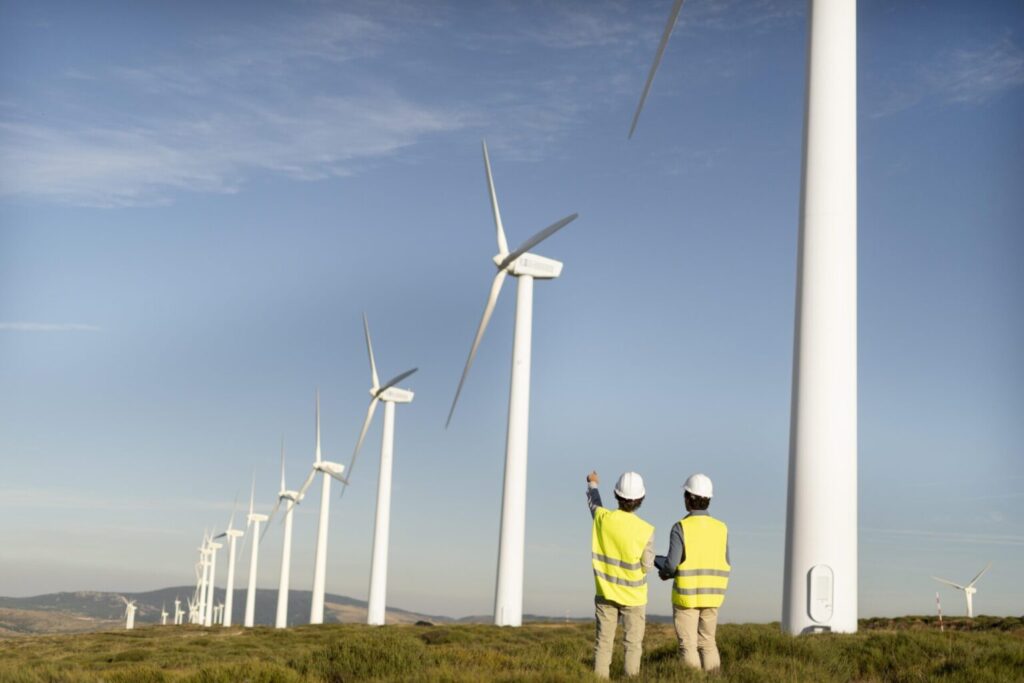
Wind turbine technicians install, inspect and maintain wind turbines. The role involves climbing turbines, diagnosing faults and carrying out preventative maintenance to keep equipment operating safely and efficiently.
Many employers provide additional technical training once workers have entered the industry.
Essential Qualifications:
- White Card
- Working at Heights
- First Aid & CPR
- Electrical or Mechanical Trade (preferred for many positions)
Entry-level workers often begin as wind farm labourers or trade assistants before progressing into technician roles through additional training and on-the-job experience.
Technicians need a good head for heights, since modern turbine towers reach 100 metres or more, and rescue training is part of the job. The Global Wind Organisation (GWO) certification is becoming the industry standard, and many employers fund it for promising trade assistants. Wind farms also need technicians long after construction ends, making this one of the most stable long-term roles in the sector.
3. Renewable Energy Electrician
Average Salary: $90,000-$140,000+ per year
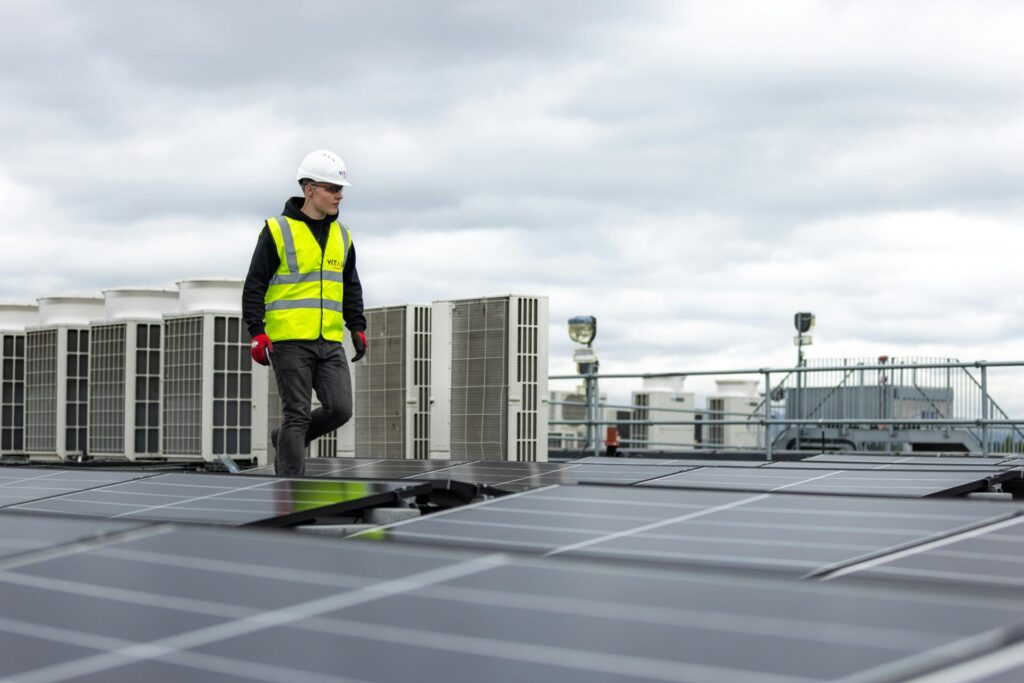
Renewable energy electricians install and maintain electrical systems on solar farms, wind farms, battery storage facilities and transmission projects. They play a critical role connecting renewable infrastructure to the electricity grid.
Demand continues to grow as Australia expands its renewable energy capacity.
Essential Qualifications:
- Electrical Licence
- White Card
- Working at Heights
- First Aid & CPR
Qualified electricians can transition into renewable energy by completing any required site safety training and applying for renewable energy construction or maintenance projects. Solar and battery projects need electricians for everything: cable pulling, terminations, inverter installation and commissioning.
Rates on major projects often beat metro electrical work, especially with site allowances and overtime included. Electricians with solar accreditation or switching experience can command even higher rates as projects race to meet connection deadlines.
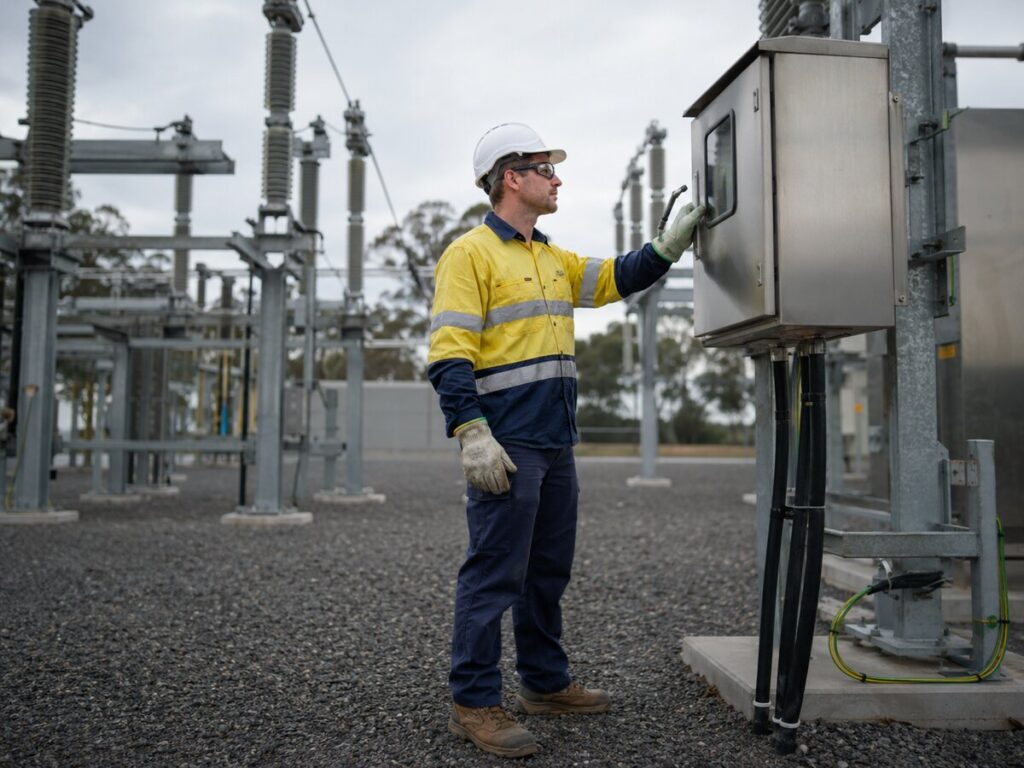
4. High Voltage Electrical Worker
Average Salary: $120,000-$180,000+ per year
High voltage workers install, test and maintain electrical infrastructure that connects renewable energy projects to the national power grid. These roles are common on major wind farms, substations and transmission upgrades.
Because of the specialised nature of the work, experienced workers are in high demand.
Essential Qualifications:
- Electrical Trade Qualification
- High Voltage Training
- White Card
- Working at Heights
- First Aid
Most workers move into high voltage roles after gaining experience as licensed electricians and completing specialist high voltage training. Switching operators, cable jointers and substation technicians all fall under this banner, and each specialisation has its own training pathway.
The national transmission buildout means demand will outstrip supply for years, with some projects offering retention bonuses to keep experienced HV workers. It’s one of the few roles where $200,000+ years are realistic with overtime on major projects.
5. Transmission Line Worker
Average Salary: $90,000-$150,000 per year
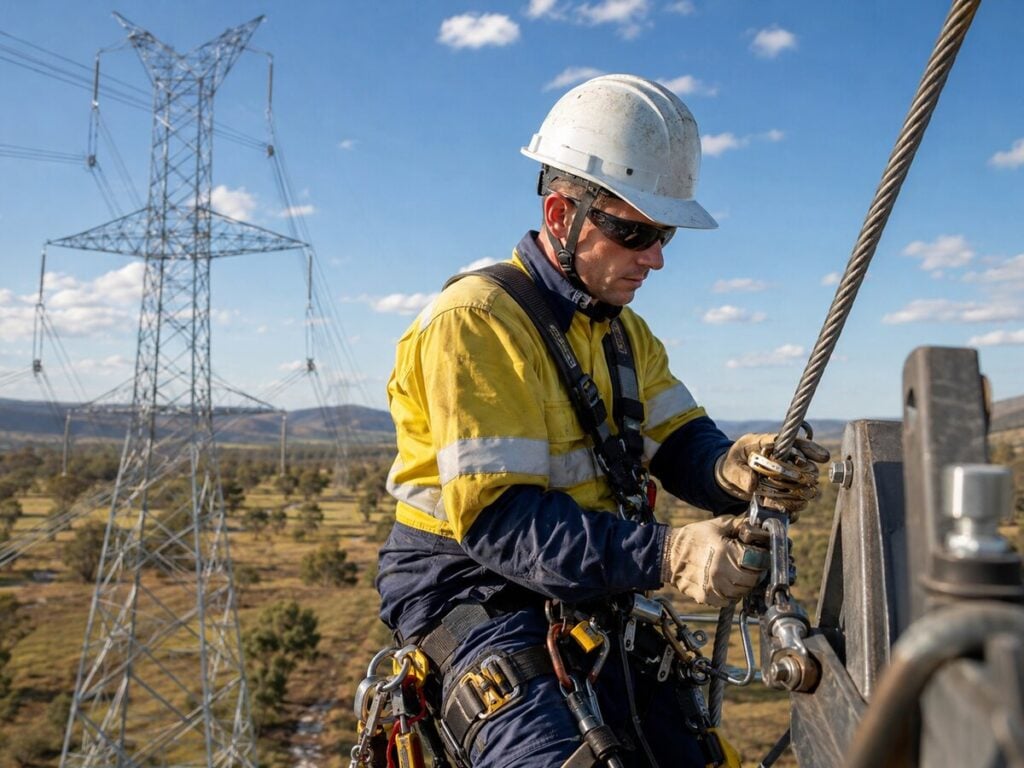
Transmission line workers help construct and maintain the powerlines that transport renewable electricity across Australia. As new wind and solar projects come online, thousands of kilometres of transmission infrastructure are being built.
The work involves outdoor construction, climbing structures and operating specialised equipment.
Essential Qualifications:
- White Card
- Working at Heights
- EWP
- First Aid
Construction or electrical experience is beneficial, although many employers recruit entry-level workers with the appropriate safety tickets. Projects like HumeLink, VNI West and Marinus Link are creating thousands of these jobs through the late 2020s.
Linework has a strong apprenticeship pathway too, with powerline worker apprenticeships offered by major contractors and network operators. The camps-and-travel lifestyle suits some people perfectly, and the pay reflects the remote conditions.
6. Battery Energy Storage System (BESS) Technician
Average Salary: $90,000-$140,000 per year
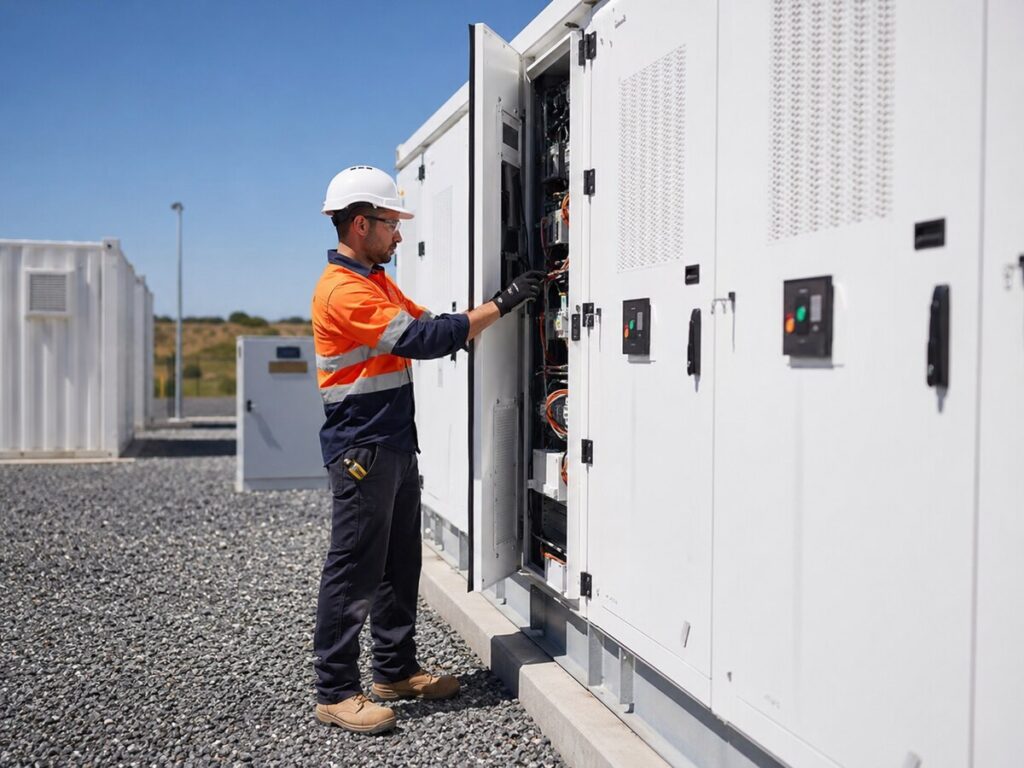
Battery Energy Storage Systems are becoming an essential part of Australia’s renewable energy network. BESS technicians assist with installing, monitoring and maintaining large-scale battery facilities that store electricity generated by wind and solar farms.
Demand for these roles is expected to continue growing over the next decade.
Essential Qualifications:
- White Card
- First Aid
- Electrical Qualification (preferred)
- Working at Heights
Electrical workers and trade assistants are well positioned to transition into battery storage projects as new facilities are constructed. BESS sites are quieter and more contained than solar or wind farms, with much of the work involving monitoring, testing and fault-finding rather than heavy construction.
Safety training around DC systems and battery fire risks is a growing specialisation that adds value to your resume. As grid-scale batteries multiply, experienced BESS technicians are becoming some of the most sought-after workers in the sector.
7. Renewable Energy Project Administrator
Average Salary: $70,000-$100,000 per year
Not every renewable energy job is site-based. Project administrators coordinate documentation, scheduling, procurement and communication between contractors, suppliers and project managers.
These positions are ideal for people with strong organisational and administrative skills.
Essential Qualifications:
- Previous administration experience
- Construction industry knowledge (advantage)
- White Card (often required for site access)
Experience in administration, logistics or construction support can provide a pathway into renewable energy project offices. Site-based admin roles often pay above their city equivalents, particularly when accommodation and travel allowances are included.
Document control, procurement support and site access coordination are the most common entry points, and the software skills involved (like Aconex or SAP) transfer between projects. Strong administrators frequently progress into project coordination and contract administration roles.

8. Environmental Field Technician
Average Salary: $70,000–$110,000 per year
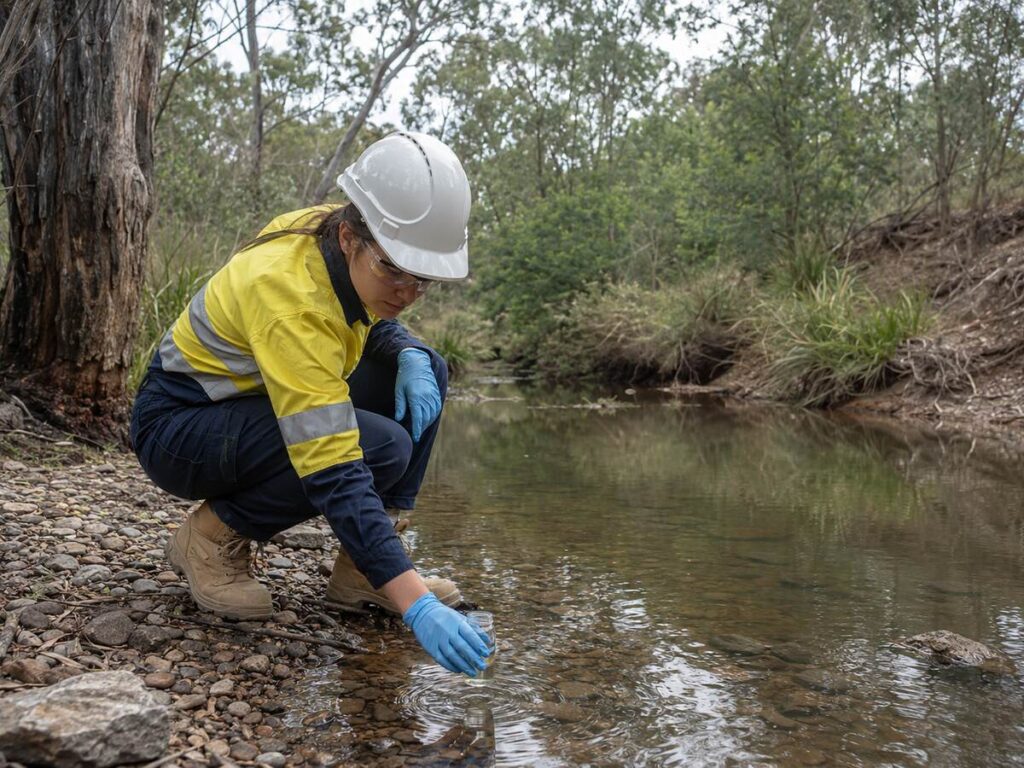
Environmental technicians monitor vegetation, wildlife, water quality and environmental compliance during renewable energy construction projects. They help ensure projects meet environmental regulations throughout construction and operation.
These roles combine outdoor work with environmental management.
Essential Qualifications:
- White Card
- First Aid
- Environmental Science qualification (preferred)
Graduates and workers with environmental monitoring experience can transition into renewable energy projects supporting construction and ongoing site operations.
Renewable projects run under strict environmental approvals, so technicians are involved before, during and after construction, doing everything up to and including bird and bat monitoring on wind farms. Fieldwork often means early mornings and remote locations, balanced with report writing from home or the site office.
9. Plant Operator (Renewable Energy Construction)
Average Salary: $85,000-$130,000 per year
Plant operators use excavators, loaders, rollers and other machinery to prepare sites for wind farms, solar farms and battery storage facilities. These skills are highly transferable from civil construction and mining.
Essential Qualifications:
- White Card
- Excavator or relevant plant tickets
- First Aid
Experienced machinery operators can often move directly into renewable energy construction, while newcomers can build experience through civil construction projects.
Solar farms need enormous amounts of earthworks, trenching and cable hauling, so operators with excavator, posi-track and roller tickets stay busy across the construction phase. GPS-guided machinery experience is increasingly valuable as sites adopt automated grading systems. Operators who pick up multiple tickets can move between projects year-round as construction schedules overlap.
10. Construction Labourer (Renewable Energy Projects)
Average Salary: $65,000-$90,000 per year
Construction labourers perform a variety of tasks across renewable energy projects, including material handling, assisting trades, preparing work areas and maintaining site safety.
For many people, this is the easiest way to gain experience and begin building a long-term career in renewable energy.
Essential Qualifications:
- White Card
- First Aid
- Working at Heights (highly recommended)
Complete your White Card and apply for labouring positions on renewable energy projects. Once on site, additional training and experience can open pathways into higher-paying specialist roles.
Labourers who show up reliably and learn fast get noticed quickly on renewable projects, where supervisors constantly look for people to train into higher roles. Many of today’s solar supervisors and wind technicians started as labourers only a few years ago. Treat the first project as a paid apprenticeship in how the industry works, collect tickets as you go, and doors open fast.
Tips for Getting Your First Renewable Energy Job
Breaking into the renewable energy industry is often about preparation rather than previous experience. Here are a few practical ways to improve your chances of getting hired.
First, complete your core safety qualifications before you begin applying. A White Card is required for almost every construction-based renewable energy role, while Working at Heights and First Aid training are frequently requested by employers. Having these qualifications already completed demonstrates that you’re ready to start work immediately.
Next, highlight any transferable experience on your resume. Employers regularly recruit people from construction, mining, civil works, warehousing, manufacturing and logistics because many of the skills required are directly applicable to renewable energy projects.
Being flexible with your location can also make a significant difference. Many of Australia’s largest solar farms, wind farms and battery projects are located in regional areas, so being willing to travel or work FIFO or DIDO can open up many more opportunities.
Finally, don’t limit yourself to applying directly with renewable energy companies. Many workers secure their first role through labour hire or infrastructure recruitment agencies that supply staff to major renewable energy projects across Australia.
Get Qualified for Renewable Energy Jobs with National Courses
Completing nationally recognised training before you begin applying can improve your employability and help you access a wider range of opportunities across solar, wind, battery and infrastructure projects.
National Courses delivers nationally recognised training including White Card, Working at Heights, First Aid & CPR, Elevated Work Platform (EWP), Forklift and more, helping you gain the practical qualifications commonly requested across the renewable energy sector.
Browse our courses today and take the first step towards a career in Australia’s growing renewable energy industry.
Frequently Asked Questions
What is the easiest renewable energy job to get with no experience?
Construction labourer, solar farm labourer and trade assistant roles are generally among the most accessible entry points for people starting out.
These positions allow workers to gain experience on renewable energy projects while learning how large-scale solar farms, wind farms and battery storage facilities operate. Many workers use these roles as a pathway into specialised positions such as plant operator, technician or supervisor.
Is renewable energy a good career in Australia?
Yes. Australia’s renewable energy industry is expected to continue expanding as more solar farms, wind farms, battery storage facilities and transmission projects are developed.
The industry offers opportunities across construction, electrical work, engineering support, administration, maintenance and environmental services. For workers who continue developing their skills and qualifications, renewable energy can provide strong long-term career progression.
What qualifications help me get a renewable energy job faster?
The qualifications employers look for depend on the role, but safety tickets are important for many construction-based positions.
Commonly requested qualifications include:
- White Card
• Working at Heights
• First Aid and CPR
• Elevated Work Platform (EWP)
• Forklift Licence or plant tickets (for relevant roles)
Additional technical qualifications may be required for specialised positions such as electricians, high voltage workers and technicians.
- White Card
Are renewable energy jobs only for electricians and engineers?
No. While electricians, engineers and technical specialists are essential to the industry, renewable energy projects also require workers across many different areas.
Large projects need construction labourers, plant operators, administrators, environmental workers, logistics staff, supervisors and support workers. This creates opportunities for people with different backgrounds and skill levels.
Are renewable energy jobs permanent or only temporary?
It depends on the role and project stage. Construction jobs on solar farms, wind farms and battery projects are often project-based, meaning employment may continue for the duration of construction.
However, as more renewable infrastructure is built, ongoing opportunities are also growing in operations, maintenance, inspections and asset management.
How can I make my resume stand out for renewable energy jobs?
Focus on the skills that match what renewable energy employers need rather than only listing previous job titles.
Highlight any experience involving construction sites, safety procedures, machinery, teamwork, outdoor work, maintenance or working away from home. Include all relevant licences and qualifications clearly so employers can quickly see you are ready for site work.
Find your next course with National Courses
Ready to take the next step? Explore our short courses, choose your training location and check upcoming dates with our team.
National Courses Pty Ltd · RTO 41072.
Need a hand choosing? Call 1300 677 191.

Samuel Bohr

What is Standard 11 Training in Queensland? Complete Guide
October 15, 2026How to Get a FIFO Site Utility Job on a Mining Site
July 23, 2026